

Stop Googling Sh*t
Your frustration is their business model.
Remember when Google was good and their motto was “Don’t be evil”? That early 2000s Google: a clean white page with nothing but a search bar and two buttons. You’d type in a question, hit enter, and boom—the answer you needed was right there in the first three results. No sponsored posts disguised as answers. No clutter of ads framing the margins.
From “Don’t Be Evil” to... What Exactly?
Google’s unofficial motto from 2000-2015 was “Don’t be evil.” By 2018, it had been scrubbed from the company’s code of conduct. Since then, Google has downgraded treatment of everyone from their employees to their users to their advertisers:
Overview of the Post-DBE (Don’t Be Evil) Era:
Users: Google deliberately degraded search quality to force multiple searches per query, generating more ad impressions. More searches per query equals more ads. More ads equals more revenue. Your frustration became their business model—and the internal memos prove it was intentional.
Workers: Paid executives accused of sexual harassment $90 million and $35 million in exit packages, sparking a 20,000-employee global walkout and eventual $310 million shareholder settlement.
Small Business: A federal judge ruled Google illegally monopolized digital advertising, keeping up to 36 cents on every ad dollar while forcing businesses to pay ransom just to appear in searches for their own brand names.
Advertisers: Google’s own research shows 56% of ads it sells are never actually viewed by humans, contributing to $26-42 billion in annual ad fraud.
What happened to Google? They succumbed to the process of enshittification.
What Is Enshittification?
Coined by tech journalist Cory Doctorow, enshittification, 2023’s word of the year, describes the predictable lifecycle of internet platforms:
Stage 1: The platform is great for users, offering genuine value, clean interfaces, and real solutions. Users flock to it.
Stage 2: Once the user base is locked in, the platform prioritizes business clients (advertisers, retailers) over users. Quality degrades, but slowly enough that users don’t leave en masse.
Stage 3: The platform squeezes both users and business clients to maximize profit for itself. The experience becomes actively worse for everyone except shareholders.
Google is a prime example, but not the only, of enshittification at work in our daily digital lives. Facebook’s feed went from showing you posts from friends to an algorithmic nightmare of ads and suggested content you never asked for. Twitter buried the chronological timeline and prioritized paid blue checks over actual relevance. Netflix, once the savior from cable, now runs ads and cracks down on password sharing after building its empire on both. The pattern is always the same: hook users with something great, then slowly make it worse once they’re locked in.
You can read more about enshittification Doctorow’s new book:

The Monopoly Problem
When you’re arguing with your spouse about who won the luge in the 1994 Olympics (Georg Hackl, by the way), you’re not pulling out the World Book Encyclopedia. You’re googling it. The word “google” is synonymous with “to look up on the internet,” the way “Bandaid” means bandage and “Kleenex” means tissue. This linguistic takeover signals total market dominance. And when a company achieves that level of dominance, it stops worrying about losing customers. Why innovate when people have nowhere else to go?
But There Are Now Alternatives
Kagi (pronounced “KAH-gee”) is a paid search engine that uses Google’s own data but presents it the way Google used to—clean, organized, and focused on giving you the answer you’re actually looking for…without any ads. Just search results, ranked by relevance.
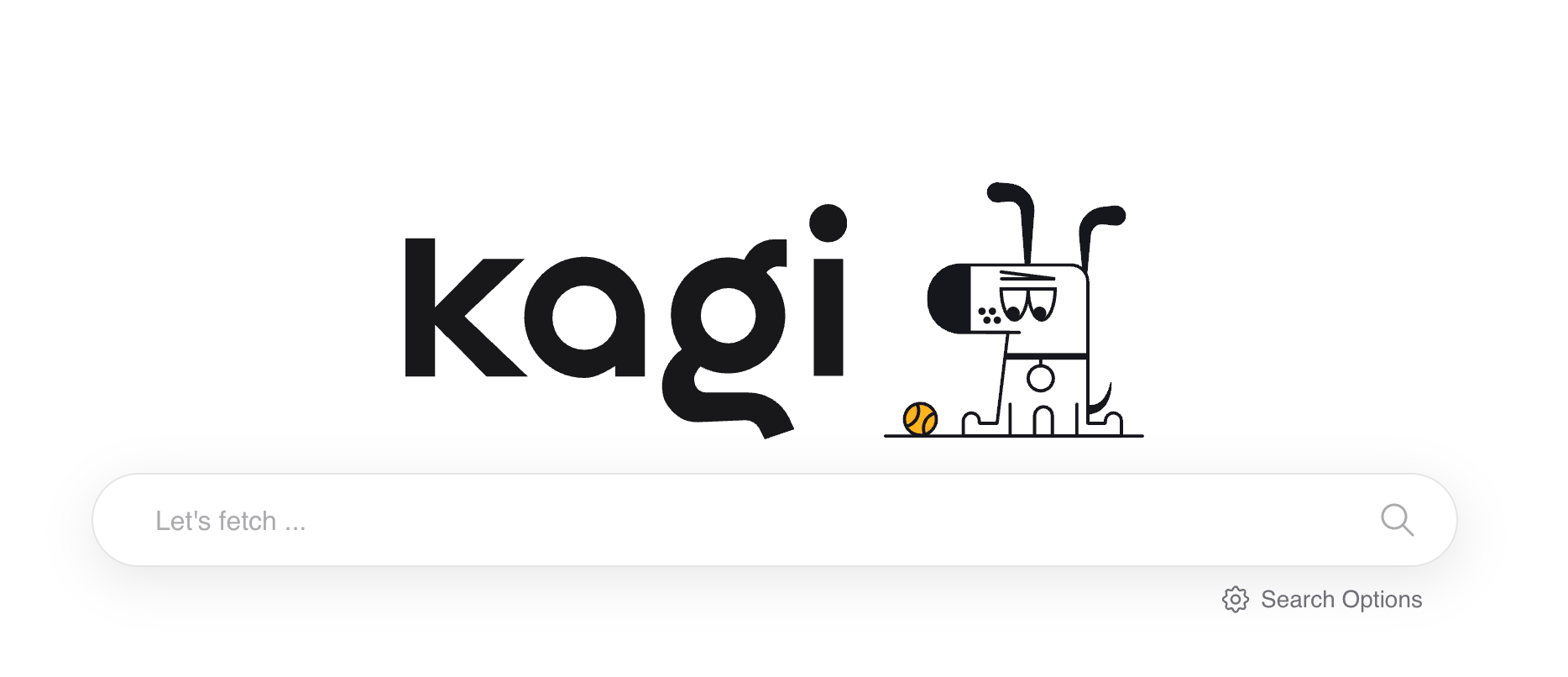
It costs a flat fee for unlimited searches, which might sound absurd when Google is “free.” But you’re opting to pay $10/month instead of unlimited amounts of your attention, data, and time otherwise spent wading through garbage results. Kagi lists the most relevant results for your query without any accompanying sponsored results. Not only does it prevent you from inadvertently shopping, it declutters the screen to make it a calmer, more streamlined searching experience. I tried it last week for the first time and am hooked. But there are also other search engines, like Duckduckgo, which is free.
What This Means for GOOGL
As an investment advisor, I’m thinking about what new options like Kagi mean not just for the Google user but also for the Google stock owner. Short-term, the outlook is stable. Most people aren’t ready to make the leap yet. Even me—thoroughly fed up with being force-fed the same pair of Rothys ballet flats every time I look up the local weather—am nowhere near ready to transfer my email off Gmail. I’m still mourning giving up my AOL handle (”Windblower86”—woodwind player, born in 1986). Anyone else who regrets losing their AIM name knows that switching costs are real. That inertia will keep Google profitable for a long time.
But enshittification is a real medium-to-long-term risk. No monopoly lasts forever, especially if it rapidly downgrades its services to all its users. As more people get fed up with Google’s enshittification, more companies will create alternatives and users will be more willing to explore them.
So do you need to panic-sell your Google stock? No.
Should you be buying more? I wouldn’t. First, there’s no reason to reward a company that’s building up your IRA while simultaneously making your daily internet life worse. Second, piling into Google only encourages more enshittification.
Besides, if you own a broad index fund, you already own a ton of Google. It’s one of the largest components of the S&P 500. (What percentage? I don’t know. Why don’t you go Kagi it ;) You’re exposed whether you want to be or not. No need to double down.
The Bottom Line
Enshittification only works if we let it. Google is banking on your inertia—that you’re too busy, too tired, too habituated to care that your internet experience gets worse every year.
But, your attention is worth something and your time is worth something. You don’t have to abandon Gmail tomorrow, but maybe rescue your eyeballs from one daily indignity. Try Kagi. Or DuckDuckGo. Or literally anything that prioritizes finding your answer over selling you stuff.
Once you remember what it feels like to get a clean answer on the first try, you’ll wonder why you put up with the sh*t for so long.